"Can we do adaptive assessment too?" It's a question we get fairly regularly. And it's almost always followed by a second one: is that something you simply switch on, or is there more to it?
It's that second question we'd like to answer in this thought piece.
Adaptive assessment sounds appealing, shorter tests, better matched to the candidate, but it does ask something of your question bank and your organisation up front. So here's an explanation of what it actually is, what it delivers, and when it does and doesn't make sense to consider.
What is adaptive assessment?
Adaptive assessment is a form of assessment in which the test adjusts to the candidate's level during delivery. Instead of everyone receiving the same questions in the same order, the score on the previous question determines which question comes next. Usually this is based on difficulty: if the candidate answers well, a harder question follows; if the candidate scores lower, the next question is slightly easier.
What it takes under the bonnet
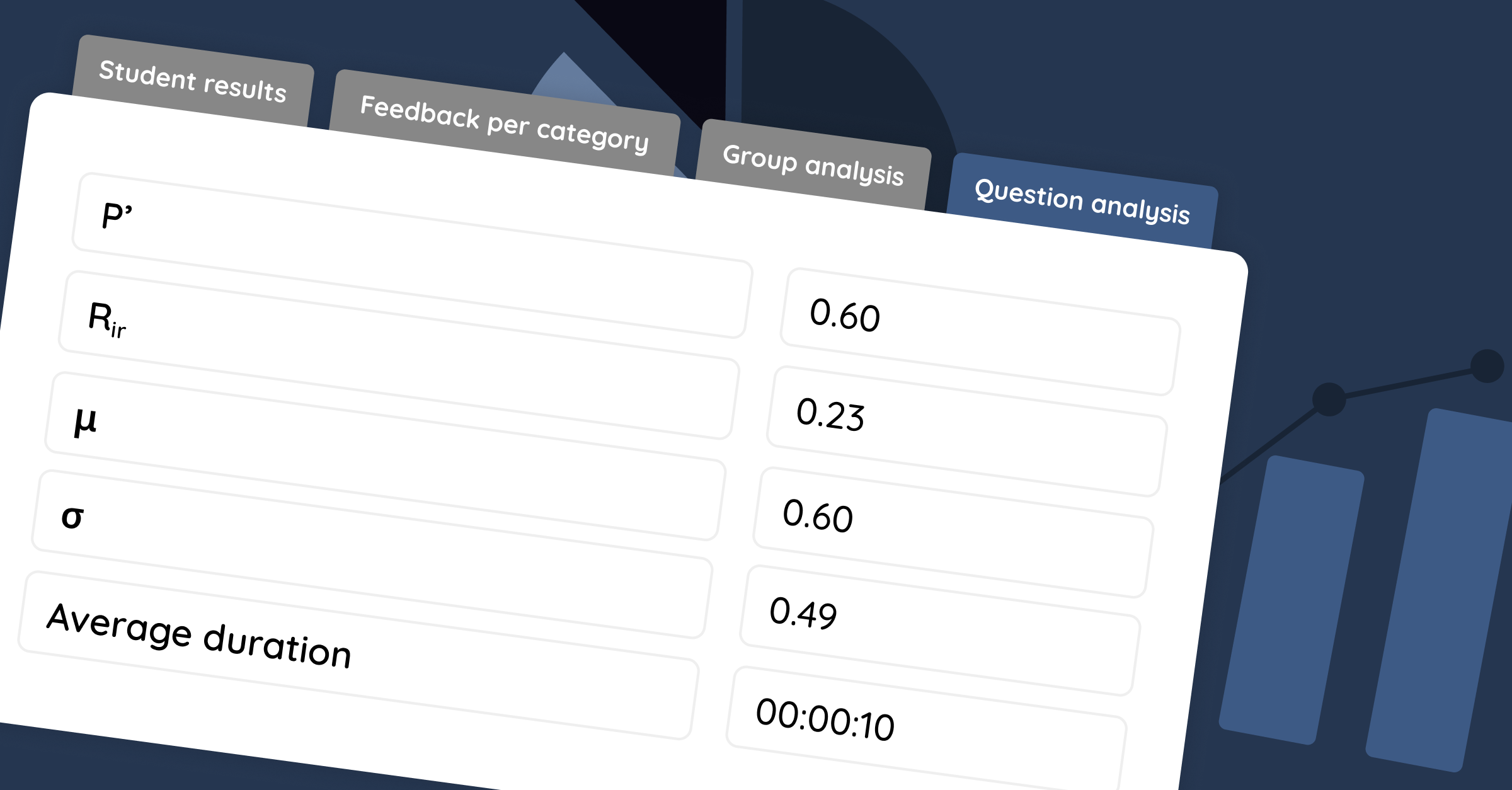
This approach often relies on item response theory (IRT), which places question difficulty and candidate ability on a single scale. That requires a calibrated question bank: questions that have already been delivered several times, so their level of difficulty is known. An underlying algorithm — with rules for the starting point, question selection, scoring and stopping, determines which question is the most informative at any given moment.
What it delivers
The main advantage is efficiency: research into adaptive assessment shows that an adaptive test can be shorter than a linear one while remaining at least as precise. Candidates at either end of the scale, very strong or less strong, also get a test that suits them better, rather than one geared towards the average candidate.
What to bear in mind
There are caveats too. Because every question depends on the previous answer, candidates can't go back to revise an answer, and a stable internet connection is usually essential. It's also harder for candidates to gauge how well they're doing, since the test deliberately offers questions around their own level, with a roughly equal chance of getting them right or wrong. On top of that, building a calibrated question bank and algorithm takes a considerable investment up front, and the method lends itself above all to measuring one clearly defined skill.
When is it worth considering?
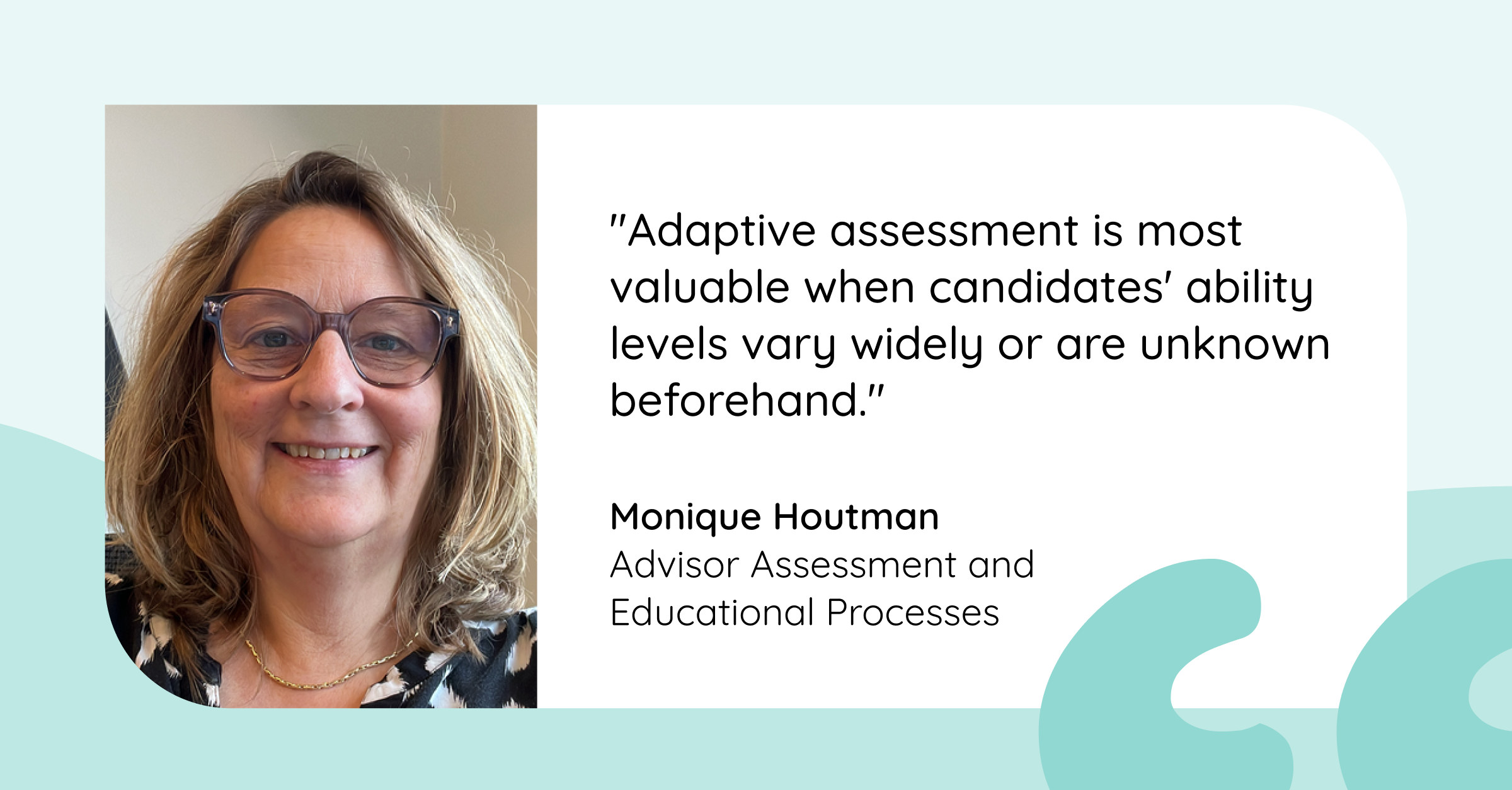
Adaptive assessment is particularly valuable when candidates' levels vary widely or aren't known in advance. In practice it's often used by organisations that already assess digitally at scale and have enough delivery data to calibrate their questions.
Adaptive assessment, then, isn't a matter of flipping a switch, but the payoff, shorter, sharper tests that do justice to different candidates, is often worth the investment in a calibrated item bank. The question isn't so much whether it's possible, but whether your item bank and your data are ready for it.
.webp)