
Multiple-choice questions are one of the most commonly used question types in digital assessments. They are quick to create, easy to review, and familiar to both educators and candidates. But precisely because they are so dominant, other, equally powerful, question types are often overlooked. And that’s a missed opportunity.
Question types such as matching/matrix questions, drag-and-drop questions, and hotspot questions may require a bit more development time, but they offer significant benefits in return. They make it possible to assess knowledge at a deeper level, combine multiple concepts within a single question, and better align questions with specific learning or assessment objectives. In addition, they significantly reduce the chance of guessing.
In this blog, we explain why these question types deserve more attention and how they can be used in surprising ways, not only with images, but also with diagrams, graphs, and even text. To inspire you, we’ve worked out several examples.
Matching / Matrix Questions
As the name suggests, this question type allows you to match elements. At its core, it answers the question: “What belongs with what?”
Each row you add essentially functions as a multiple-choice question. If multiple connections per row can be correct, each row becomes a multiple-response question.
Depending on the context, this question type can quickly become quite complex, making it ideal for assessing applied knowledge — for example, when asking for the correct action in a given situation.

Hotspot Questions
The most obvious application of this question type is to answer questions such as “Where is…?” on a map or “Where do you see…?” on a (medical) image or schematic drawing. But did you know that hotspot questions can also be used to identify elements within a text? Look at the example below.

Drag-and-Drop Questions
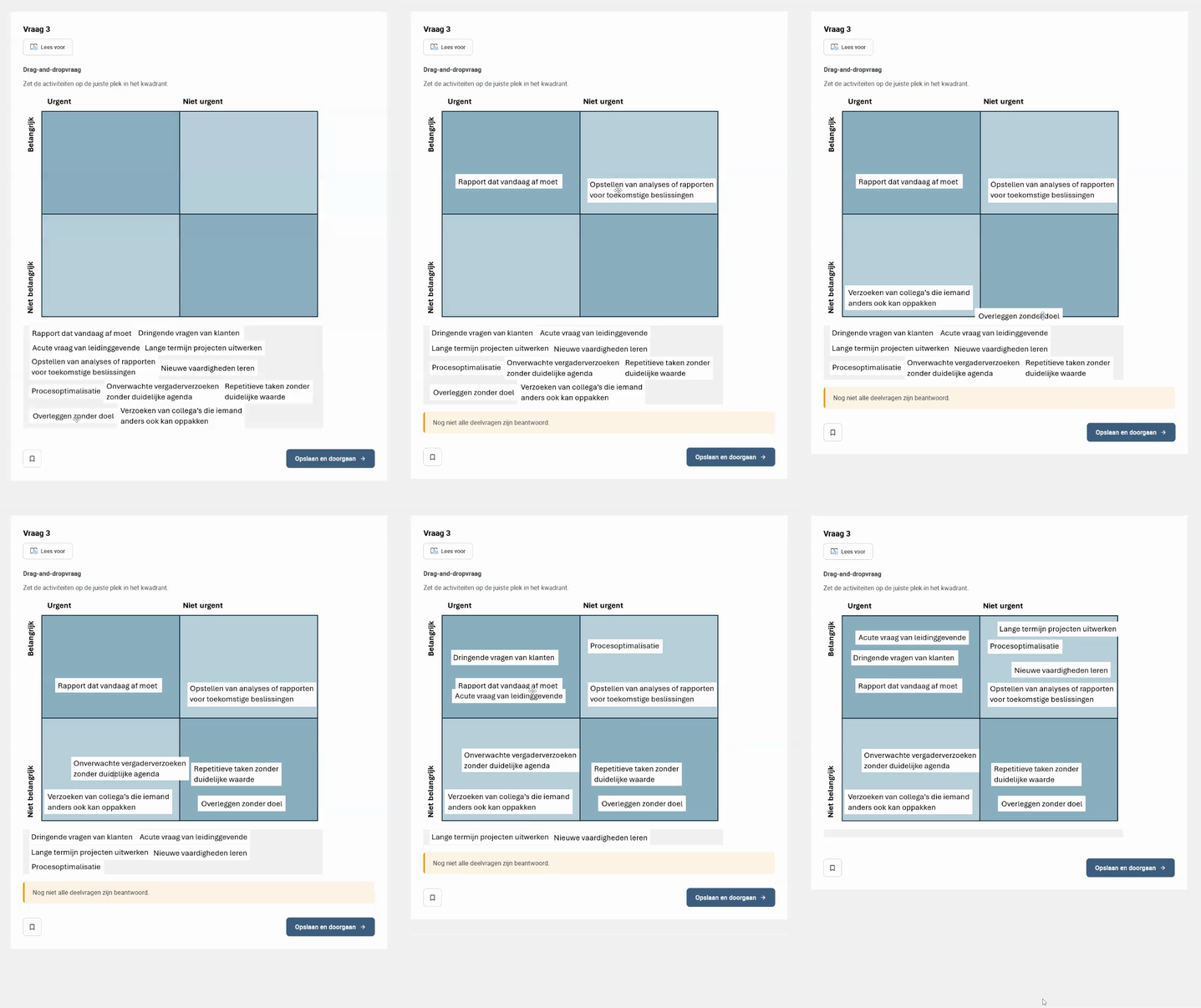
This question type is often used to place concepts in the correct location within an image for example, matching the name of a component to the correct part of a diagram. It is also an excellent question type for assessing applied knowledge, such as asking candidates to interpret a graph or assemble a technical diagram using movable elements.
In the example provided, candidates must determine where a specific activity belongs within a given process diagram. Look at the example below how it's used.
A deliberate choice in question design
Choosing a question type should never be a matter of habit or convenience alone. Each question type offers different possibilities — and limitations — when it comes to assessing knowledge, skills, and understanding. By consciously looking beyond multiple-choice questions, you create room for more meaningful assessment that better reflects your learning objectives.
Matching, drag-and-drop, and hotspot questions encourage candidates to apply knowledge rather than recognize it. They help reduce guessing, make assessments more engaging, and provide richer insight into how learners think and perform.
Ultimately, it’s not about using more complex question types for the sake of complexity, but about selecting the right form for the right purpose. When question design aligns with learning goals, assessment becomes not only more reliable, but also more valuable for both educators and learners.
.webp)